
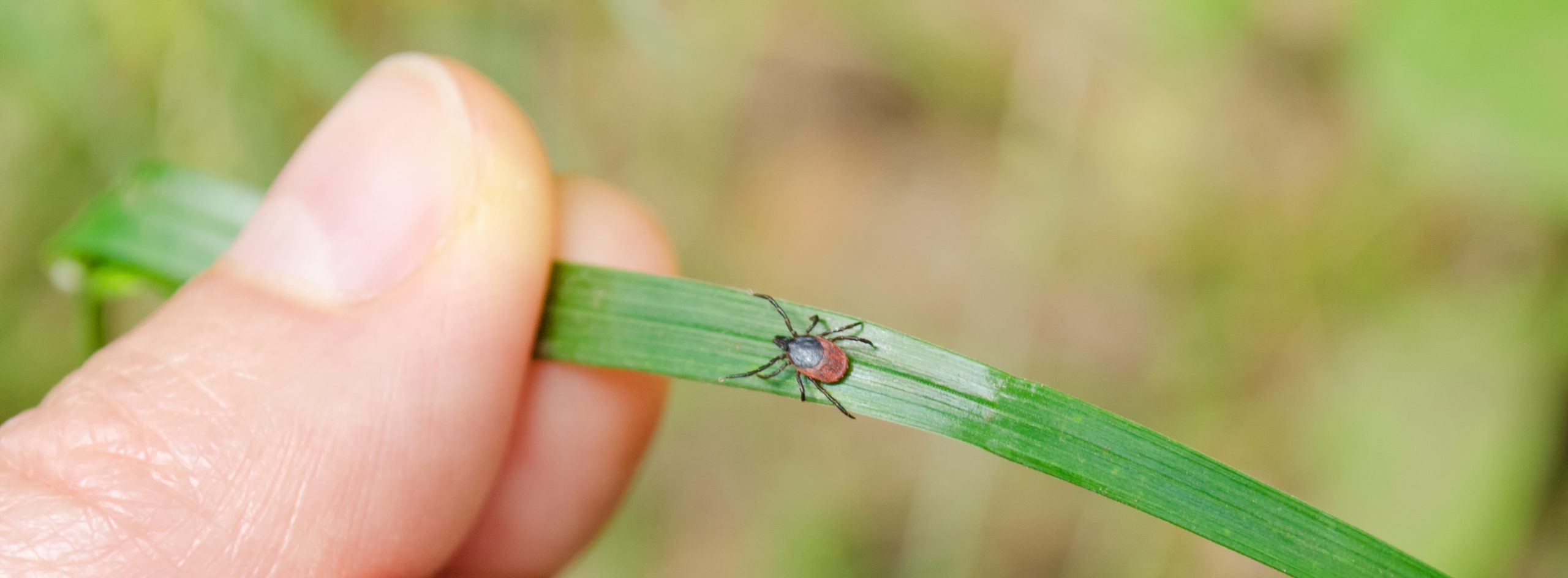
Cooler temperatures and changing leaves make fall a beautiful time to be outdoors, but ticks are still active in Southwestern Ontario. Ticks can remain active whenever temperatures are above freezing, and fall is an important time to continue taking precautions when working or spending time in wooded areas, tall grasses, brush and leaf litter.
There are several species of ticks in Ontario. Blacklegged ticks (also known as deer ticks) are a particular concern because they can transmit Lyme disease, as well as other tick-borne infections. American dog ticks can transmit Rocky Mountain spotted fever (RMSF). RMSF remains rare in Ontario, but Public Health Ontario confirmed the presence of Rickettsia rickettsii in American dog ticks collected in the Long Point area in 2025, along with human cases likely acquired locally.
A few simple ways to protect yourself
Dress for tick checks
-
- Wear light-coloured clothing so ticks are easier to spot.
- Wear long pants, long sleeves and closed footwear.
- Tuck pant legs into socks when working in areas with tall grass or brush.
- Consider using an insect repellent containing DEET or icaridin, following the product label.
Check yourself after being outdoors
Ticks can be tiny and easy to miss. After spending time outdoors, check your clothing and body carefully, especially around the ankles, behind the knees, groin, armpits, belly button, neck, ears and scalp. Use a mirror or ask someone to check areas that are difficult to see. A shower soon after coming indoors can also help remove unattached ticks. Check outdoor gear and pets, too.
If you find a tick, remove it promptly
Use fine-tipped tweezers to grasp the tick as close to the skin as possible and pull it straight out, gently and firmly. Don’t twist, squeeze, burn or apply substances such as petroleum jelly to the tick. After removal, wash the bite area and your hands with soap and water. If possible, take a photo of the tick or keep it for identification. eTick can help identify ticks found in Canada.
A tick bite doesn’t necessarily mean you’ll become sick, but it’s worth taking seriously. If you develop symptoms such as fever, headache, muscle aches, unusual fatigue or a rash following a tick bite or outdoor exposure, contact a health-care provider and mention your possible tick exposure. You may also want to consult your pharmacist, especially if you are not sure how long it has been attached.
Keep exploring this fall, but keep checking for ticks, too.

