
Insects are the most biodiverse group of animals on Earth, with over 200,000 species described. The Long Point Basin on the north shore of Lake Erie has over 4,500 species of insects! Insects are highly variable in form – some of the more well-known groups are beetles, butterflies, moths, ants, bees, and dragonflies.
Many of Long Point’s native insects rely on natural ecosystems for their survival. Meadows contain high concentrations of wildflowers – essential sources of nectar for many bee and butterfly species. Forests and swamps contain trees and shrubs which are important as a larval food source for many species for lepidopterans (butterflies and moths) as well as beetles at all life stages. Wetlands, especially marshes, are breeding grounds for a vast diversity of aquatic insects.
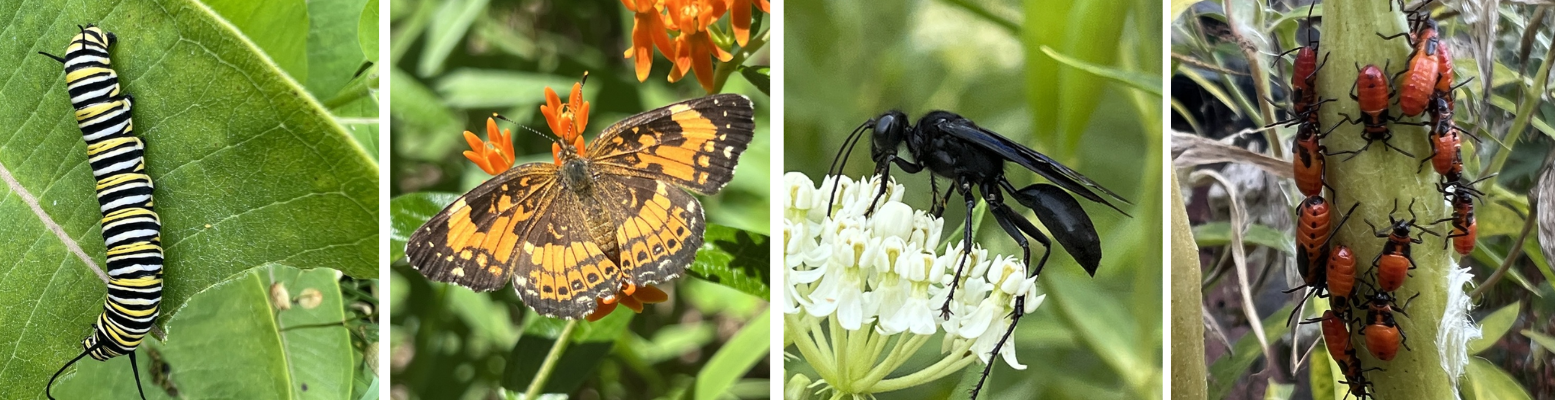
A list of native insect groups
- Alderflies, dobsonflies, and fishflies (Megaloptera)
- Bees, wasps, and ants (Hymenoptera)
- Beetles (Coleoptera)
- Booklice and Barklice (Psocoptera)
- Butterflies and Moths (Lepidoptera)
- Caddisflies (Trichoptera)
- Crickets, Katydids, and Grasshoppers (Orthoptera)
- Dragonflies (Odonata)
- Earwigs (Dermaptera)
- Fleas (Siphonaptera)
- Flies and Mosquitos (Diptera)
- Mantids (Mantodea)
- Mayflies (Ephemeroptera)
- Stoneflies (Plecoptera)
- Termites and Cockroaches (Blattodea)
- Thrips (Thysanoptera)
If you would like to learn more about the ecology and distribution of Ontario’s insects – consider visiting informative websites (such as Bug Guide) many which provide photos and identification tips. You can also visit Ontario’s Butterfly Atlas and iNaturalist, online mapping resources providing detailed information about the geographical distribution of insects.
Conservation efforts
The Long Point Basin Land Trust works with volunteers, landowners, and conservation partners to help conserve reptile diversity, as well as the ecosystems that support insects and many other wildlife species!
A wide variety of conservation activities are conducted by Long Point Basin Land Trust to restore native insect populations and their habitat. This includes the restoration of marginal lands to native wildflower meadows – an effort to boost populations of important pollinators and many other insects, as well as native seed collection for use by other like-minded organizations and landowners.
An effective outreach and education program has also improved public awareness of imperiled wildlife of the Long Point Basin, strongly in need of protection! Long Point Basin Land Trust distributes many forms of media, including fliers, factsheets, and online resources. Results from surveys done over the past 30 years show an increased interest in Long Point’s insects and their ecology – leading to conservation actions that protect wildlife!
The Long Point Basin Land Trust’s primary mission is to protect the biodiversity and habitats of the Long Point Basin area – which involves the securement of land parcels with high-quality ecosystems where wildlife is most abundant. To date, Long Point Basin Land Trust has secured 17 nature reserves spanning ~1200 acres (~500 hectares), with more in the works! These protected areas expand upon a vast conservation network established by Long Point Basin’s partners, such as the Nature Conservancy of Canada, the Long Point Region Conservation Authority, the County of Norfolk, the Canadian Wildlife Service, and the Ontario Ministry of the Environment, Conservation, and Parks, as well as other smaller organizations. Through years of conservation efforts and ecological restoration, many protected habitats have become interconnected, allowing wildlife to move across large landscapes with minimal disturbance.
Tips to help native insects within the Long Point Basin
- Plant native plants – the single most impactful action! Whether you are an urban homeowner, or rural landowner – every effort helps. Native insects have evolved alongside native plants and rely on them for food (nectar, pollen, leaves), shelter, and egg-laying sites. Choose a variety of species that bloom throughout the growing season, this will maximize your positive impacts. Consider plants adapted to your specific soil and moisture conditions.
- Delay autumn cleanup and spring lawn-mowing. Many insects overwinter in leaf litter or use dead wood for shelter and egg-laying. Other species are highy active in the early spring, making this quite a sensitive time. Consider creating brush piles or leaving standing dead trees (if safe).
- Do not overspray when using pesticides – this leads to unnecessary impacts on the environment. Consider avoiding neonicotinoids if possible – these systemic pesticides are particularly harmful to bees, birds and other organisms.
- Support conservation organization – donate to or volunteer with organizations in Ontario that work to protect natural habitats and biodiversity!
—
Written by Matthew Palarchio, HBSc in Environmental Sciences, Western University
Photos by Matthew Palarchio
Help support this species!
The species you’ve just read about—and the ecosystems they depend on—need our protection. Support the work of the Long Point Basin Land Trust and help preserve the wild spaces of the Long Point Basin: https://longpointlandtrust.ca/donate
To view a directory of all species featured on our website, visit: https://longpointlandtrust.ca/featured-species

