

Early Season Count Shows Encouraging Activity
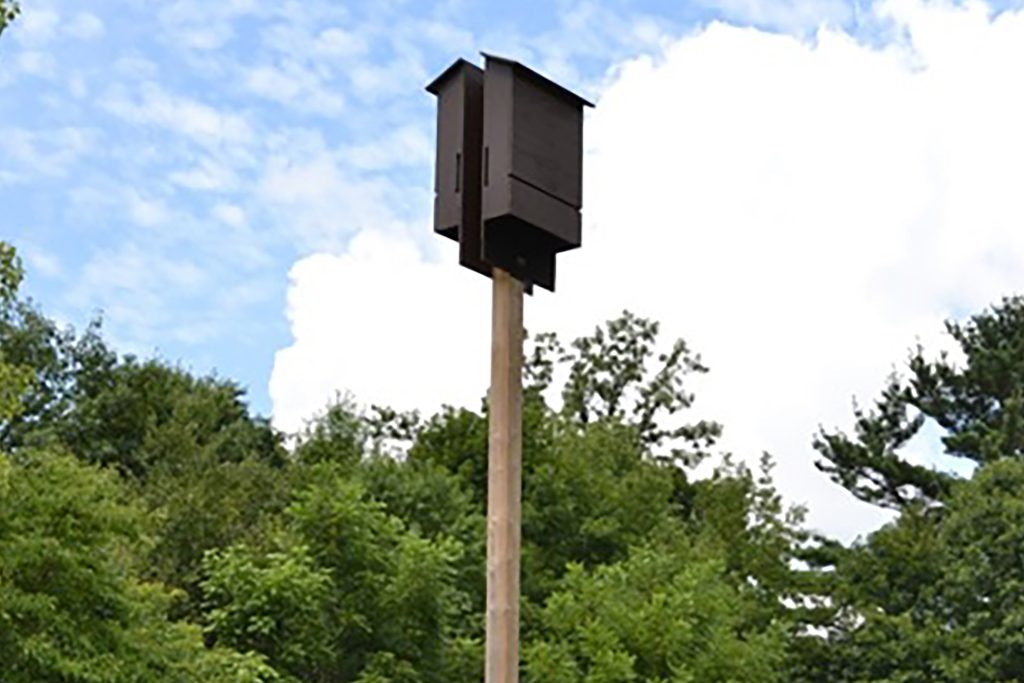
On May 27, 2025—one of the first truly warm evenings of the month—Long Point Basin Land Trust volunteers conducted an early-season bat emergence count at the double nursery box at Arthur Langford Nature Reserve. With temperatures around 15°C and calm conditions, it was an ideal night to check in on one of the reserve’s most important (and smallest) mammal communities.
A Long-Term Monitoring Effort
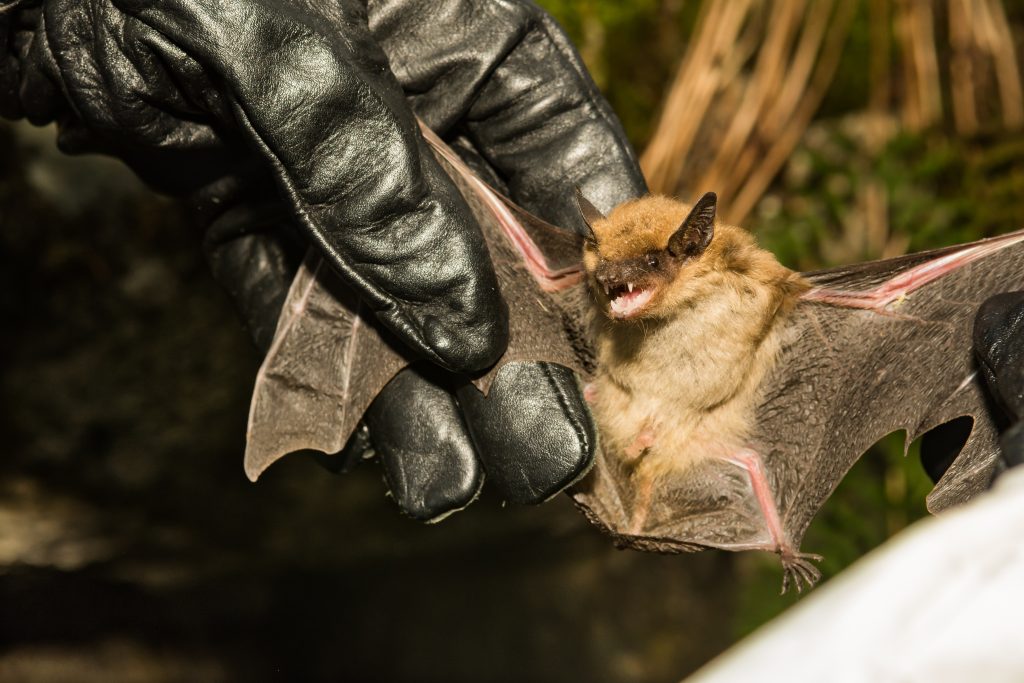
The nursery box, installed in 2008, has been monitored regularly since 2010, with the first observations reported by local naturalist Adam Timpf in 2009. These boxes provide summer roosting habitat for female Little Brown Bats and their pups. Once one of the most abundant bat species in North America, Little Brown Bat populations have declined dramatically due to White-nose Syndrome, a fungal disease that affects bats during winter hibernation. This makes every data point—and every healthy colony—all the more significant.
How We Count
Because bats often exit in quick bursts or small groups, it takes two observers to accurately track the emergence. Counts usually take place in late May and June, just before pups are born. Bats typically begin emerging around civil twilight—the moment the landscape dips into dusk, like when streetlights switch on.
Past years have shown notable fluctuations:
-
12 June 2024: 218 bats emerged, with ~40 adults remaining inside
-
11 May 2023: 158 bats
-
5 June 2023: 202 bats
These variations are normal and reflect timing, weather, and the colony’s annual cycle.
This Year’s First Count
During this year’s early count, the first bat emerged at 9:10 p.m., with the last slipping into the night at 9:45 p.m. In total, 188 bats were observed emerging—and none remained in the box by the end of the count. This is a healthy early-season number, offering a hopeful sign for the colony’s continued recovery and stability.
Why Stewardship Matters
Bats play an essential role in local ecosystems, consuming vast numbers of insects—many of them pests to crops and forests. Supporting bat populations means protecting forests, wetlands, and the insect-rich landscapes they rely on. At Arthur Langford, ongoing stewardship includes habitat protection, careful monitoring, and tracking threats such as White-nose Syndrome and the decline of hemlock forests that support other sensitive species.
Each annual count helps the Land Trust understand how local bat populations are faring and informs future conservation decisions. It’s a quiet reminder of why long-term, consistent stewardship matters—and how even small actions can help safeguard species at risk.

