Introduction
Eastern Hemlock (Tsuga canadensis) is one of the most gorgeous, and ecologically fascinating of Ontario’s native coniferous trees. It is one of 9 species of hemlock (Tsuga sp.) in the world. Only one other hemlock grows in eastern North America, Carolina Hemlock (Tsuga carolina), distributed in the montane forests of southern Appalachian Mountains of North Carolina and Virginia. Western North America is home to two species, the Mountain Hemlock (Tsuga mertensiana), a narrow, conical tree subalpine forests in the Coast and Rocky Mountains, and the Western Hemlock (Tsuga heterophylla), the largest hemlock species, growing in the mild, rain-drenched Pacific Coastal forests, especially on Haida Gwaii and Vancouver Island, where it attains it’s most massive form.
Description
Hemlock is a large coniferous tree in the pine family (Pinaceae), growing up to 50 m. It is evergreen, retaining its needle-like leaves throughout the winter. Needles are ~1.5cm long, arranged opposite to each other, giving young twigs a flattened appearance. Seed cones are 2.5cm long, and similar in appearance to spruces (Picea sp.). Ecologically, Hemlock is considered a late-successional tree species as it dominates older-growth forests, thriving in shaded areas, and contrastingly, not tolerant of major disturbances, such as wildfires. It has a very distinctive growth form – a pyramidal crown with weeping branches. This is an ecological adaptation to the heavy shade and high snowfall in the areas where Eastern Hemlock is most abundant.
Hemlock obtained its name similarly to the crushed foliage of poison hemlock (Conium maculatum), a poisonous, European forb. There are also several closely-related species to the European poison-hemlock native to Norfolk County, the most common being water-hemlock (Cicuta maculatum), which is a common understory plant in deciduous swamps (typically dominated by Silver Maple, Acer saccharinum). All poison-hemlocks are members of the carrot family (Apiaceae).
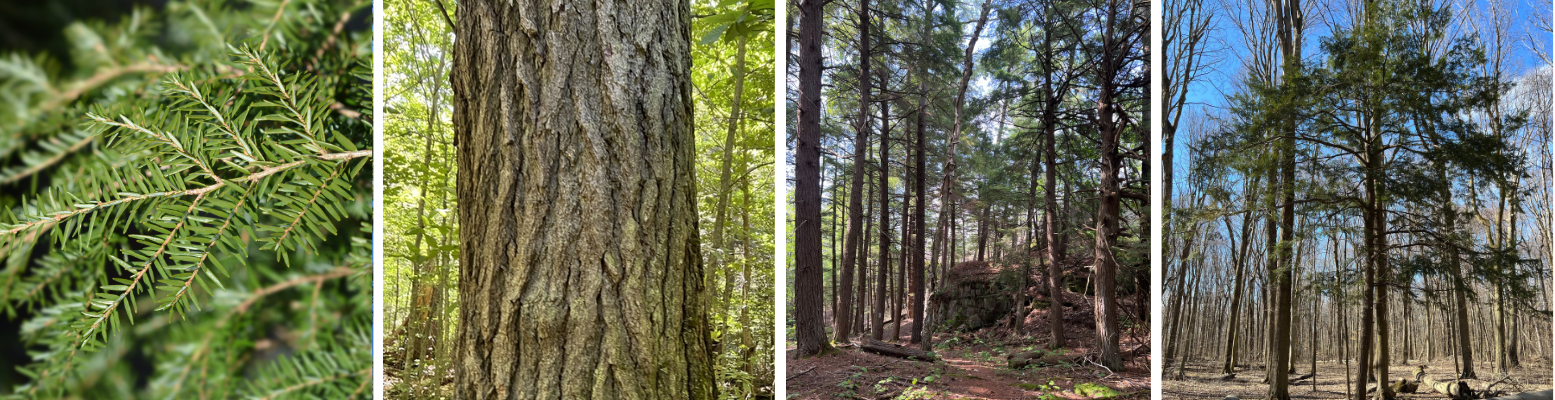
Hemlock is distributed throughout the Great Lakes Region and Appalachian Mountains. It is most common in northern Ontario and Michigan’s upper peninsula, where some of the largest concentrations of older-growth Eastern Hemlock trees occur in North America. Algonquin Provincial Park is home to over 40% of the remaining old-growth Great Lakes forests in Ontario, and much of these strands are Eastern Hemlock. In those areas, Eastern Hemlock is very common, especially in moist forest ecosystems, especially with Sugar Maple (Acer saccharum), Yellow Birch (Betula lutea), American Beech, and White Pine (Pinus strobus).
In much of the Lake Erie region (“Carolinian Life Zone”), Eastern Hemlock is a regionally uncommon species: attributable to the prevalence of hardwood species, warm microclimates, and a history of forest disturbance / deforestation, which suppresses Hemlock growth. However, it is more common in southern Norfolk County, where varied terrain creates favourable habitats for Hemlock, especially moist, cool microclimates. Hemlock is most abundant on north-facing slopes, and moist bottomlands. It is also common in moist hardwood forests, especially in Sugar Maple – Beech strands as scattered specimens.
An older stand of Eastern Hemlock can be found within the eastern portion of Backus Woods. LPBLT also protects substantial populations of Hemlock on a substantial proportion of its properties, including the Hammond Hemlock Slough, Jackson-Gunn Old-Growth Forest, Fisher’s Creek Nature Reserve, Stackhouse Forest Sanctuary and Arthur Langford Nature Preserve.
A Growing Threat to Our Hemlocks: Hemlock Woolly Adelgid
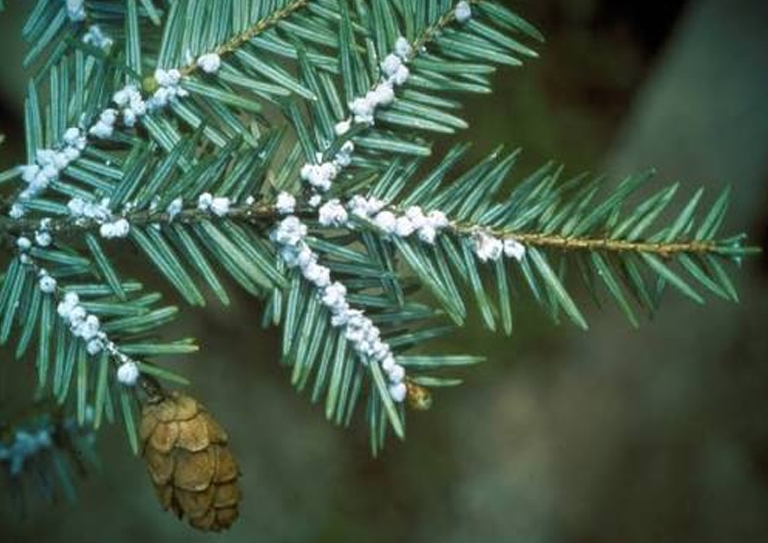
Hemlock Woolly Adelgid is a small, invasive insect that feeds on Eastern Hemlock. It attaches itself to the base of hemlock needles and draws nutrients and water from the tree. The signs can be easy to miss at first: small, white masses appearing along the branches. Infested trees will gradually lose needles and branches, become increasingly weakened, and will eventually kill even the largest of trees.
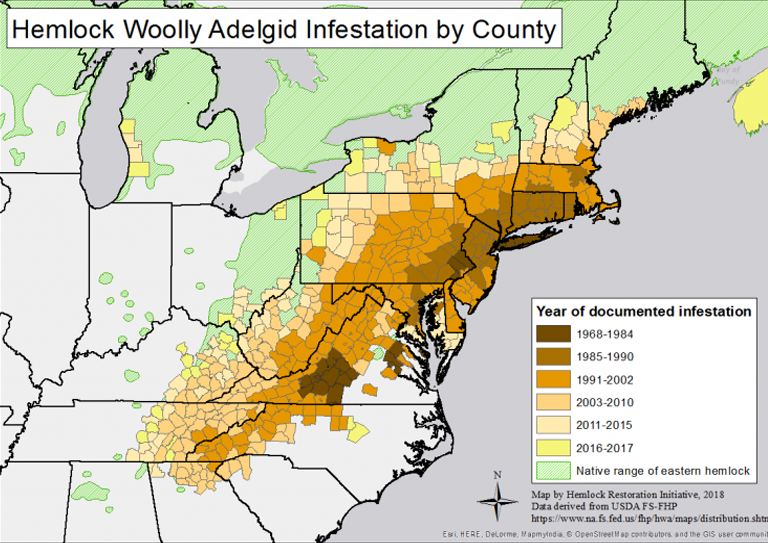
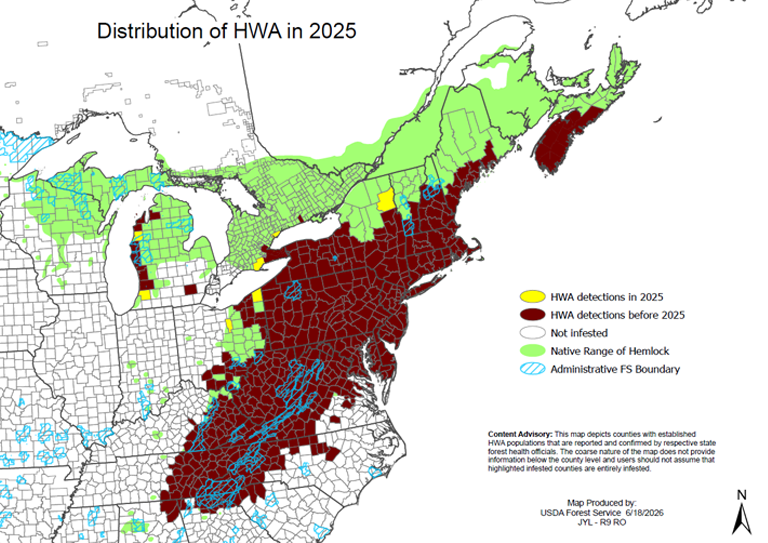
HWA originated from Asia, and was introduced to North America in 1924. Before the 1980s, it was relatively confined to the Eastern United States, confined to parts of Virginia, Pennsylvania, New Jersey, New York and Connecticut. Since then however, its range has increased dramatically into the broader range of the Eastern Hemlock, with affected tracts of forests going as far north as Nova Scotia, and as far south as South Carolina. HWA was first detected in parts of Ontario in 2012, and since then has only continued to spread. HWA spreads through both natural factors, such as on birds, animals, and the wind, but also through humans moving infected firewood, tree saplings and even on muddy shoes.
HWA’s impacts extend far beyond individual trees. The loss of mature Eastern Hemlocks can fundamentally change the forests and ecosystems they help create. As the range of HWA expands, previously unaffected hemlock forests are increasingly at risk. The Long Point Basin contains exceptionally diverse forests, and protecting the hemlocks within this landscape is an important part of protecting the biodiversity that depends on them.
Protecting the forests that protect so much more
The Eastern Hemlock is one of the most important trees in the forests of the Long Point Basin. These evergreens create cool, shaded forest environments that provide habitat for wildlife, protect streams, and support a remarkable diversity of life. But these forests face a growing threat. Hemlock Woolly Adelgid (HWA) is spreading through Southwestern Ontario, putting mature Hemlocks at risk.
The Long Point Basin Land Trust is working to protect some of largest recorded Eastern Hemlocks in Canada, located on our nature reserves, and we need your help. Several of our nature reserves contain mature Eastern Hemlocks, including some large, established trees that have been growing for potentially hundreds of years.
Unfortunately, there is currently no practical way to eliminate HWA entirely from the landscape. Recently tests have been conducted to introduce a biological control, an additional harmless predatory beetle that would feed on HWA to cull the spread of the damaging invasive adelgid. The prospects are primarily positive, with beetles being brought in from the Pacific North-West. However the biocontrol is not adapted to survive the eastern colder winters. Similar biocontrols in the past have been used in Canada to treat other invasive species, such as purple loosestrife, and recently invasive phragmites. Click here to read more about the method of biocontrols for combatting HWA. Alongside these methods, there have also been interim non-permanent treatments developed and used to protect individual trees.
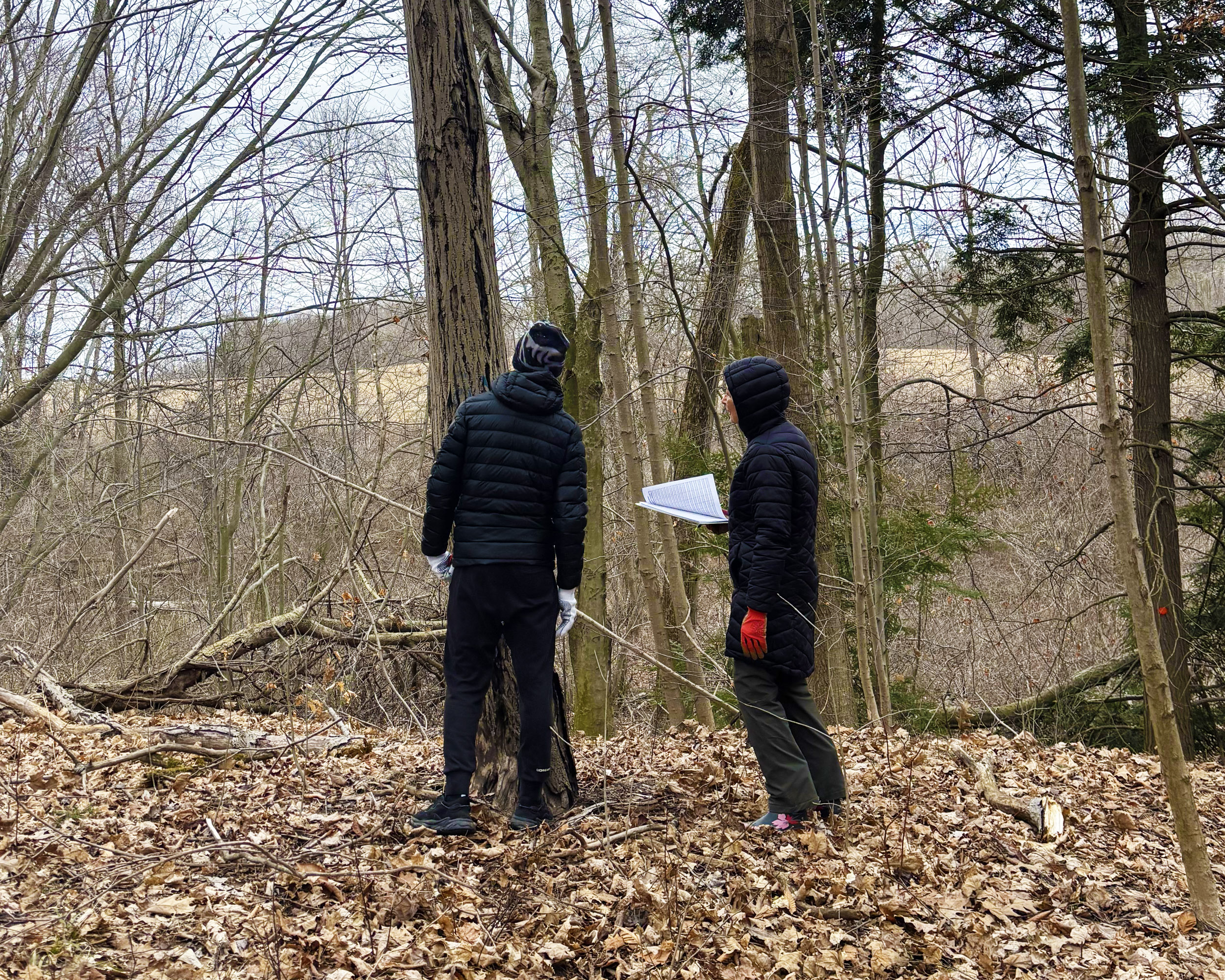
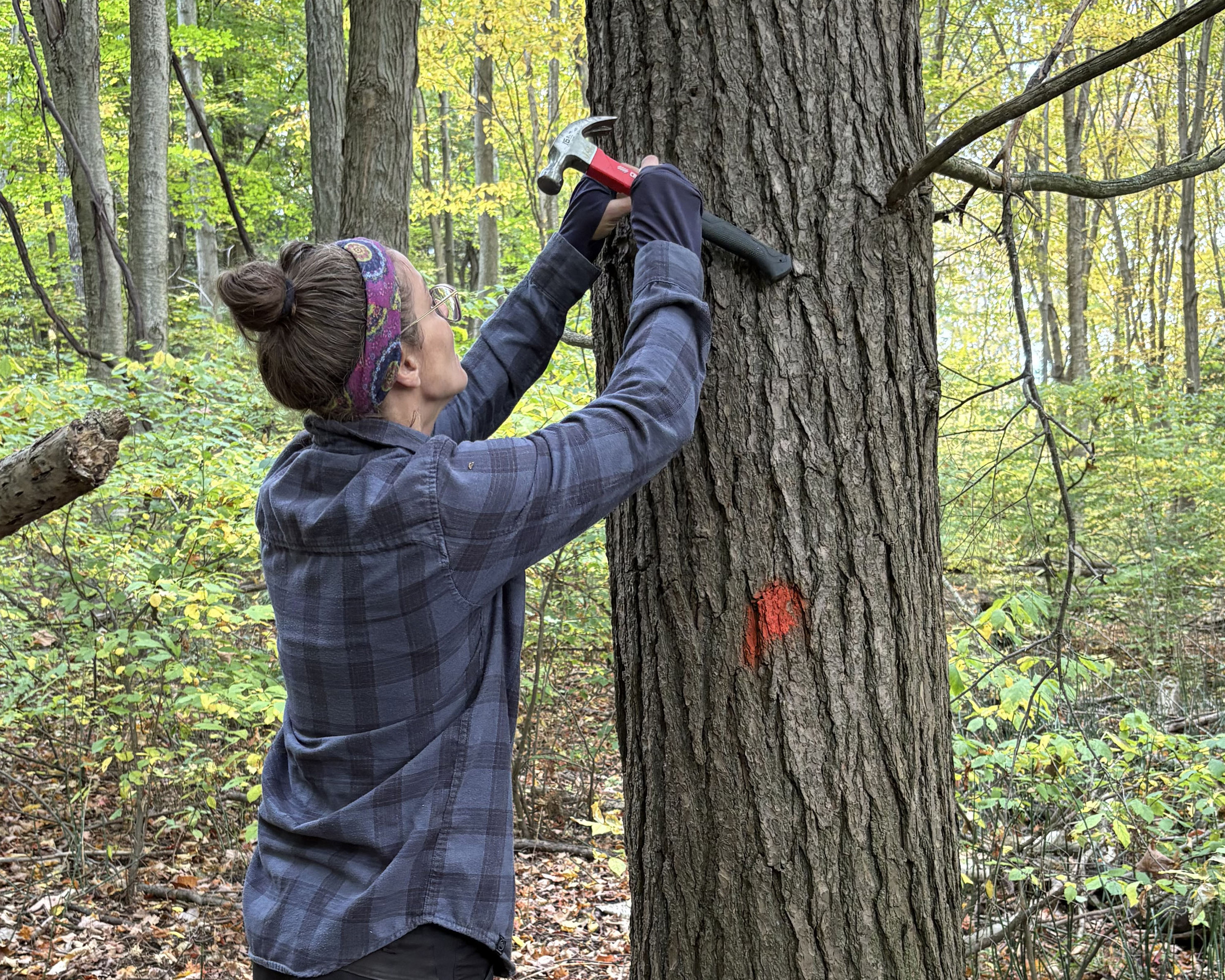
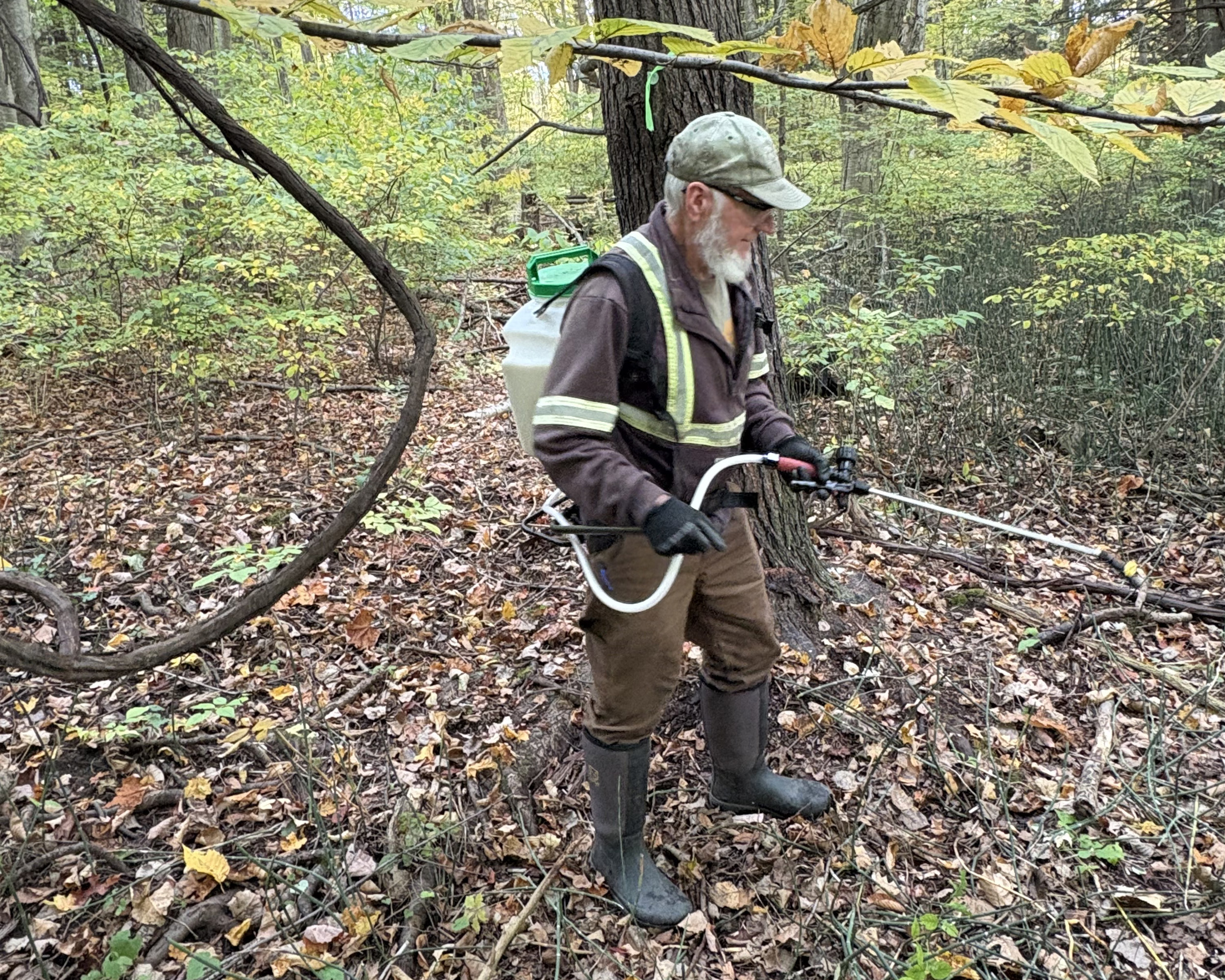
For priority trees on LPBLT’s nature reserves, we plan to use the latest treatment techniques which are best suited to sensitive conservation lands. These treatments can suppress HWA populations on individual Hemlocks, allowing healthy trees to continue growing and providing habitat while longer-term approaches to managing the pest are developed. This gives us an opportunity to protect some of the largest and most ecologically important hemlocks on LPBLT’s nature reserves.
Our stewardship team is identifying priority trees and assessing where treatment can have the greatest ecological benefit. Our goal is to protect the healthiest and most important mature Hemlocks while continuing to monitor the health of our forests. These are trees worth protecting. We invite you to help us protect them.

More Than a Tree. Eastern Hemlocks are a foundation species.
Eastern Hemlocks are much more than just another tree in the forest. Their dense canopy provides shade year-round, helping to maintain cool, moist conditions on the forest floor and around streams. This creates habitat and microclimates that benefit a wide variety of plants, animals and other organisms. Hemlocks shape the environment around them.
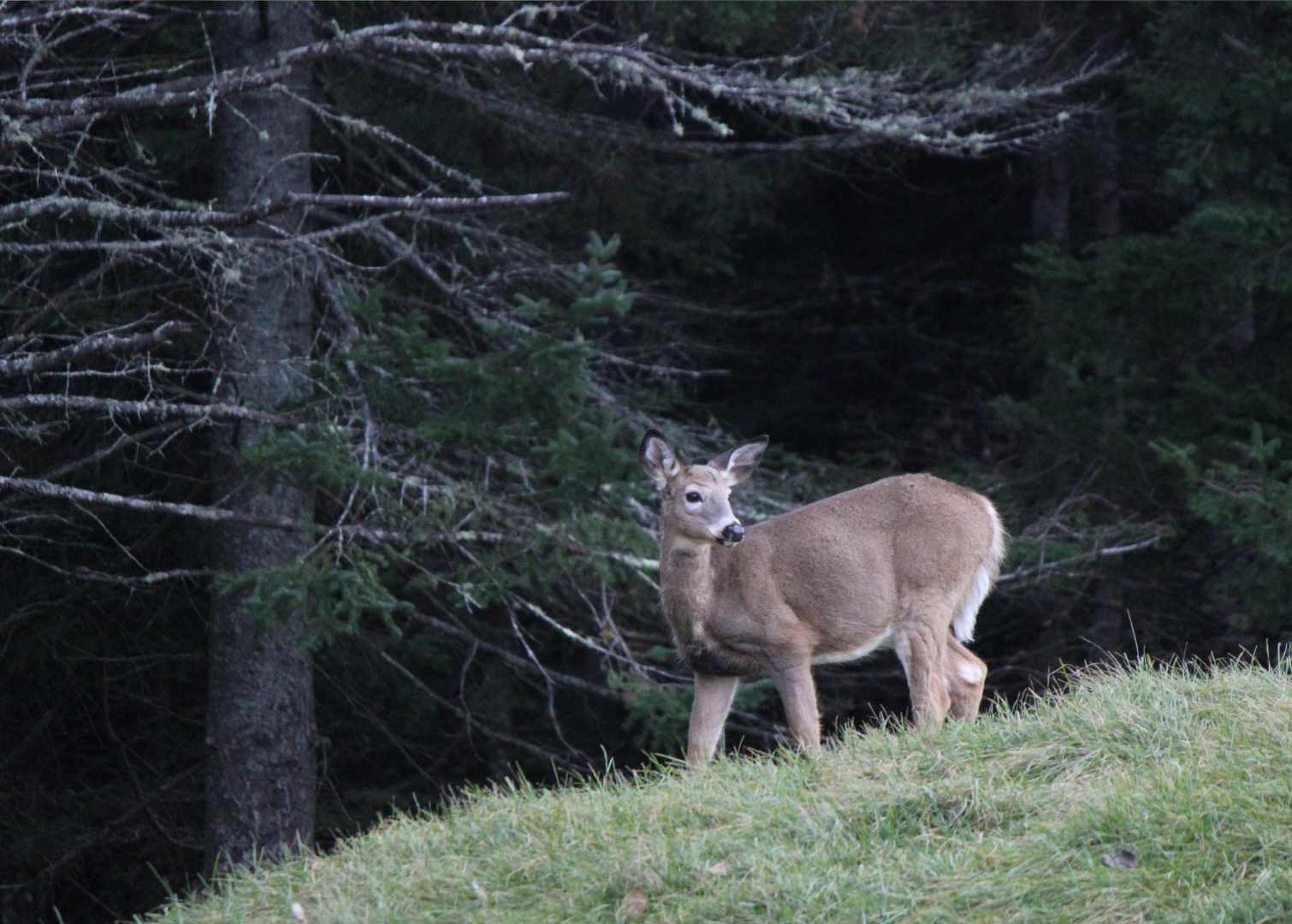
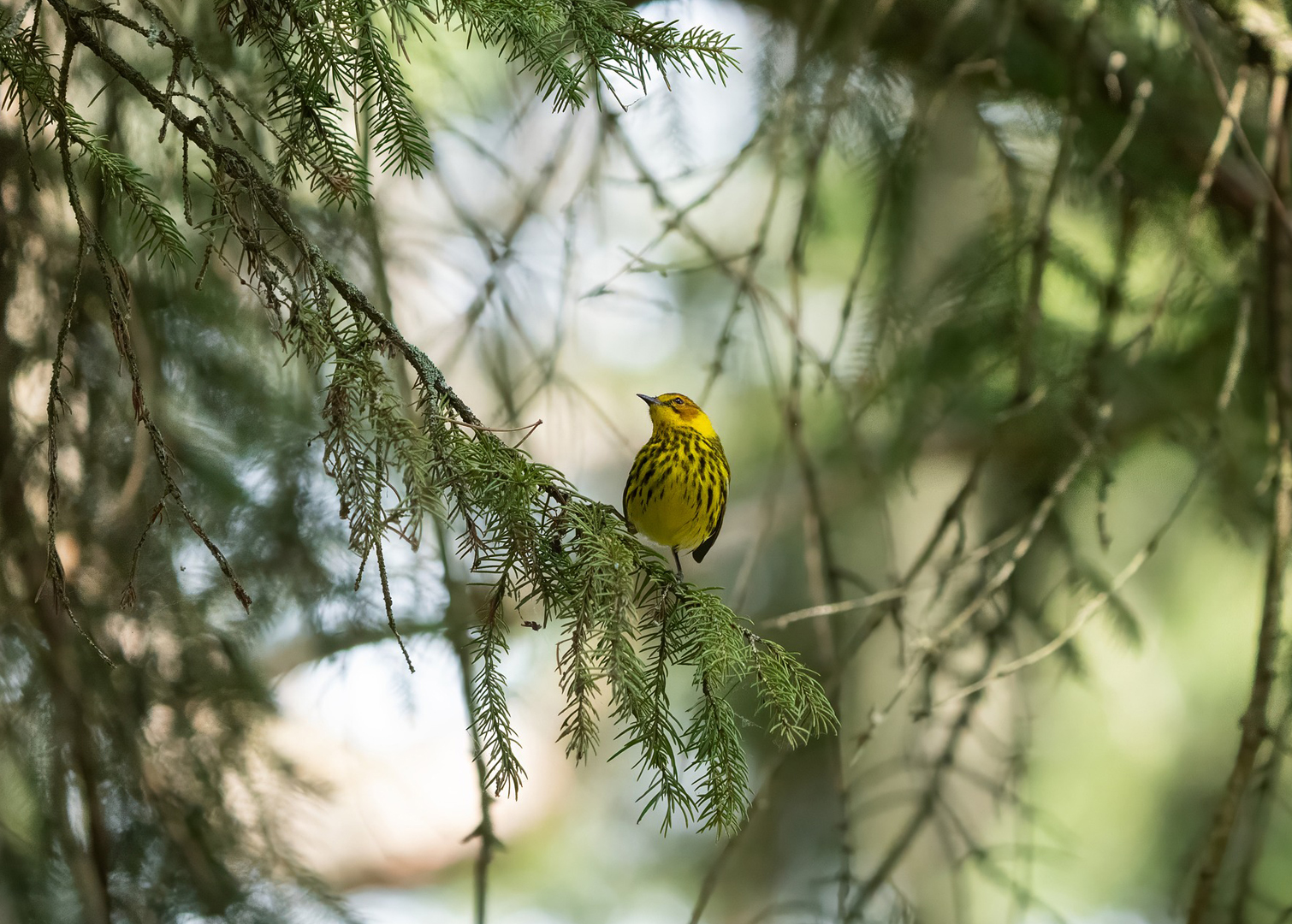
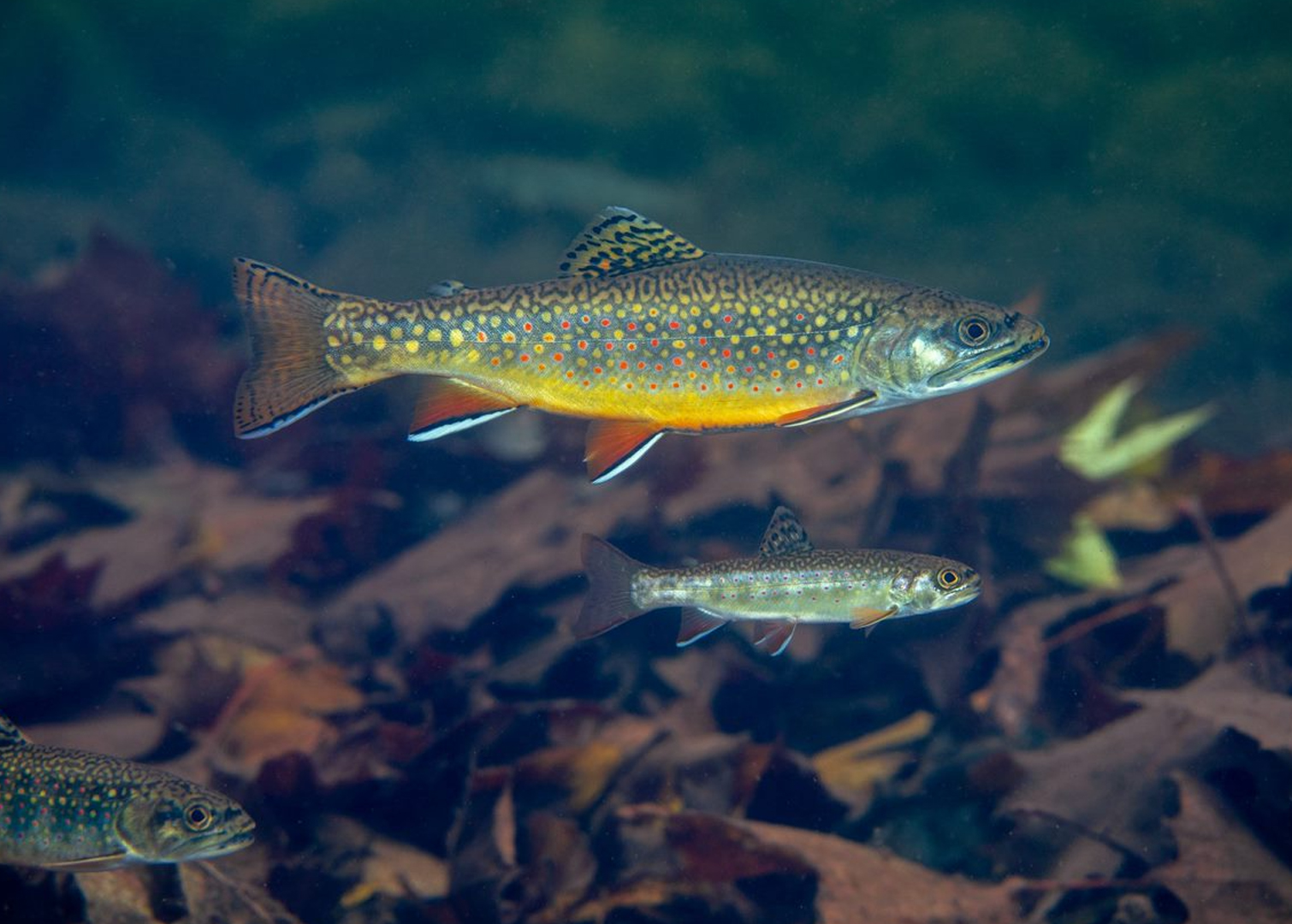
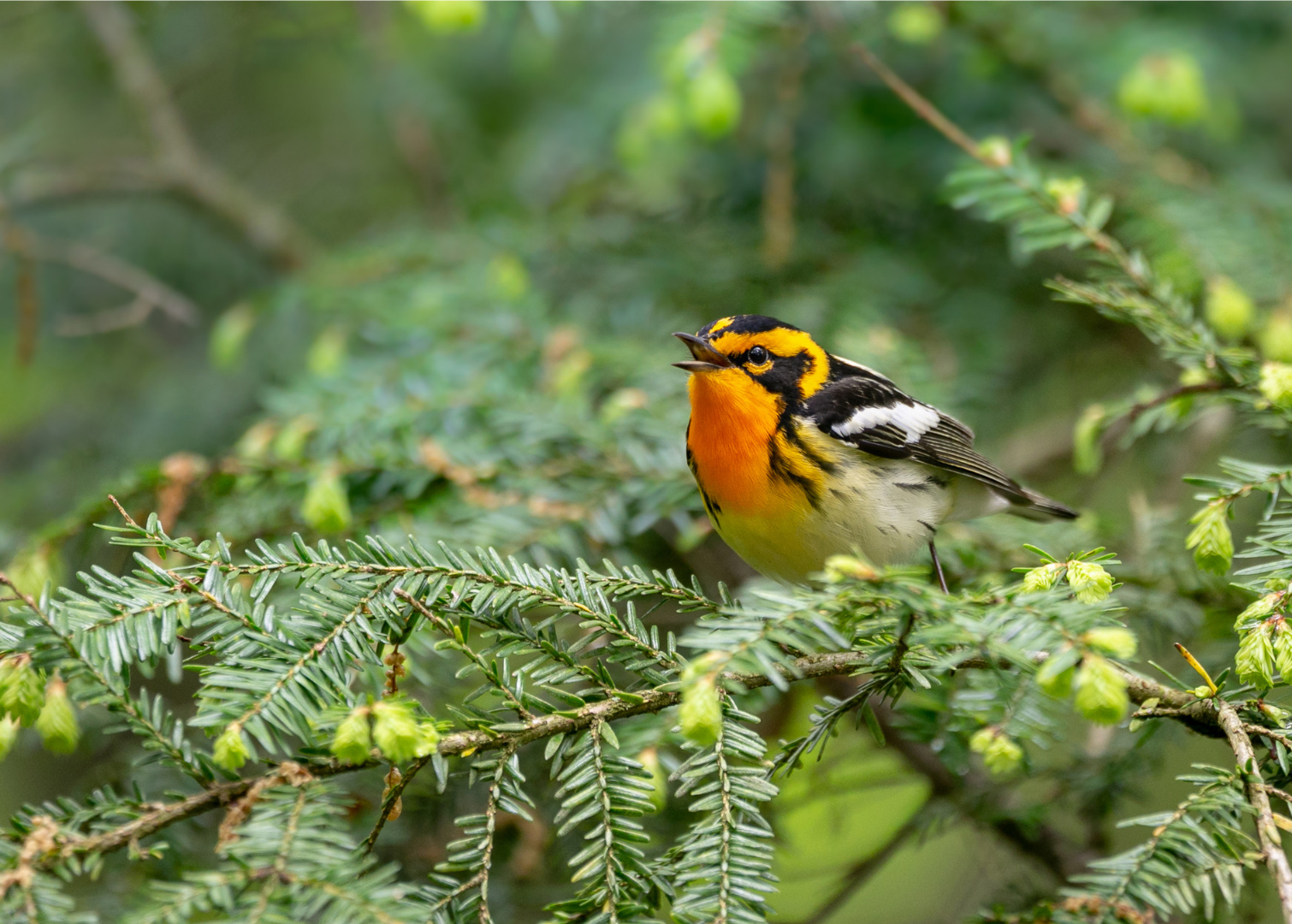
When a mature hemlock dies, it’s not as simple as losing one tree. We also lose the habitat and ecological relationships that the tree helped to create. There are a lot of species that depend on hemlock forests. Among the wildlife associated with mature hemlock forests are a large number of birds, mammals, reptiles, amphibians, and fish.