
What is HWA — and why it’s a threat
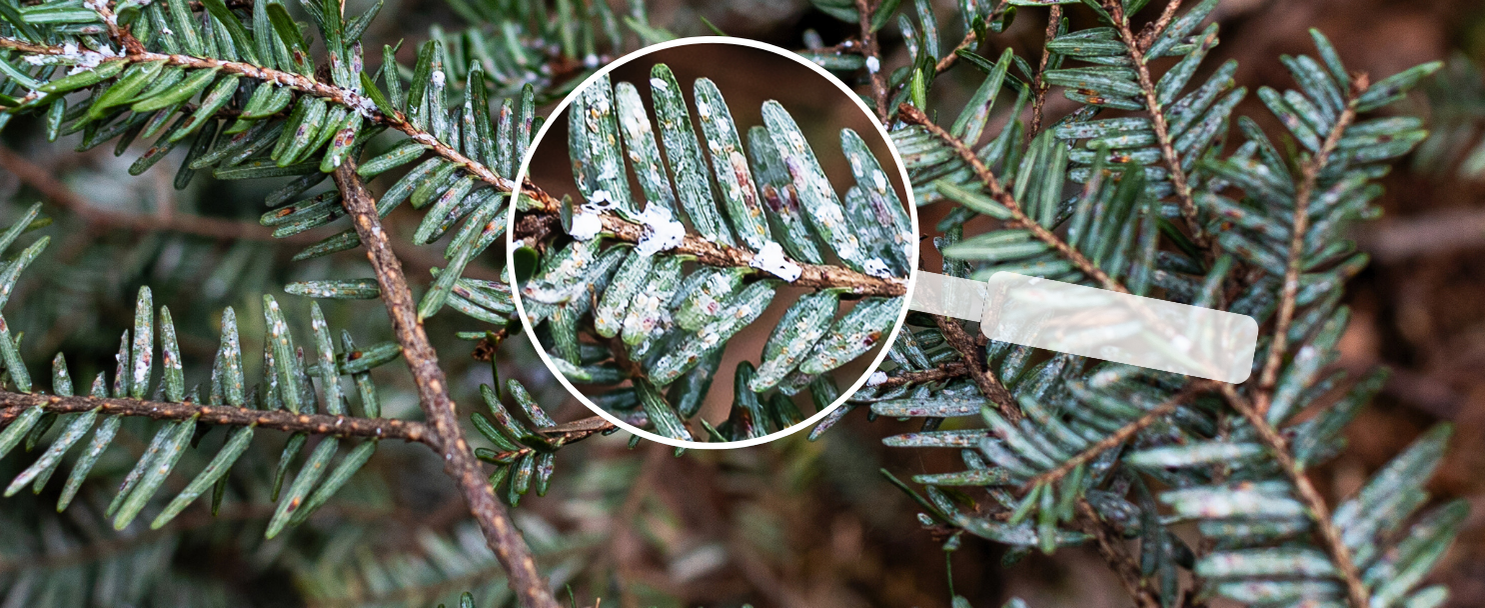
The Hemlock Woolly Adelgid (HWA) is a tiny, aphid-like insect (latin name Adelges tsugae) that infests Eastern Hemlock (and a few related hemlocks). It draws sap from nutrient and water-storage cells at the base of hemlock needles — gradually weakening the tree. Look for its tell-tale sign: small, white “woolly” sacs (like cotton tufts) at the base of needles on new twigs.
invasivespeciescentre.ca
Once infested, a hemlock experiences needle loss, die-back of shoots and branches, thinning or greying of its crown — and often dies within 4 to 15 years.
In Canada, HWA has recently been detected in multiple areas of southern Ontario and other provinces — including in the Long Point region.
Why hemlock matters — beyond just trees
Hemlocks are more than just evergreen scenery. They’re a “foundation” species: their presence helps maintain a stable forest ecosystem. Among their ecological roles:
- Habitat & refuge: Many bird species, mammals, and other wildlife rely on hemlock stands for nesting, roosting or shelter — especially in winter when hemlock foliage offers thermal cover.
- Water temperature & stream health: In riparian and stream-side zones, hemlock canopy shading helps regulate water temperature, which supports cold-water aquatic species (e.g., native trout).
- Ecosystem stability: Hemlocks influence nutrient cycling, microclimate, soil moisture and overall forest structure. Their loss can ripple across flora and fauna communities — and make disturbed forest more vulnerable to secondary invasive species (like aggressive understorey plants). Hemlocks also help stabilize ravine slopes.
Losing hemlocks isn’t just losing a tree — it’s eroding critical habitat and destabilizing whole ecosystems.
What hemlock loss could mean for Long Point basin species
Given the importance of hemlock habitat — and considering that some of the natural areas protected by Long Point Basin Land Trust contain hemlock-dominated or mixed woodlands — the spread of HWA poses a serious risk to local biodiversity. A few hypothetical but realistic consequences:
- Species such as Acadian Flycatcher — which we know depend on mature forest and intact canopy structure — may lose suitable nesting or foraging habitat if hemlocks disappear. In the wider region (and in comparable ecosystems), hemlock stands offer microclimates and canopy layering that some forest birds and amphibians rely on.
- Other forest-dependent and shade-loving species — including mammals, amphibians and understorey plants — could see reductions in habitat quality. Loss of hemlock canopy could alter moisture regimes, soil conditions and understorey vegetation, undermining habitat for sensitive species like Jefferson Salamander, Little Brown Myotis and others if they occur.
- Aquatic species in streams and wetlands may be affected: without hemlock shading, water temperatures might rise or fluctuate more, potentially stressing cold-water fish or amphibians and altering ecosystem balance.
- The overall resilience of forested reserves — in the face of climate change, invasive plants, and other stressors — could be weakened if a foundational species like hemlock is lost.
In short: more hemlock loss = fewer safe, stable habitats for many of the species Long Point Basin Land Trust aims to protect.
Why this matters now — and what we can do
The presence of HWA in southern Ontario, and its documented spread to multiple counties, means that the threat is real and growing.
We at Long Point Basin Land Trust, and all stewards of natural areas, should watch for early signs of HWA — especially on Eastern Hemlock in our properties or nearby forested buffers. Quick detection and reporting can help: HWA spreads by wind, birds, animals, and human movement of infested wood, so simple steps — like not moving firewood, avoiding bird-feeder placement near hemlocks, and monitoring trees — can reduce risk.
We may also need to update management plans: consider intensified monitoring, collaborate with provincial or national invasive-species programmes, and potentially explore active control or mitigation where feasible.
A call to vigilance — and stewardship
The loss of hemlock trees to HWA isn’t a distant possibility — it’s a present danger. For the health of Long Point Basin’s forests, wetlands and the wildlife that inhabit them, we must treat this as a priority. By monitoring, reporting, and acting early, we can help preserve not just individual trees — but entire ecosystems and the species that depend on them.
If you have hemlocks on your land, or care about nearby properties, take a moment to inspect branches for the tell-tale white sacs – the “wool” is most abundant in spring to early summer. Together, we can work to protect these irreplaceable forests.
To learn more about HWA and how to report a suspected observation to the Canadian Food Inspection Agency, visit: https://www.invasivespeciescentre.ca/take-action/hemlock-woolly-adelgid-monitoring-network/

